Historically, the church believed Paul wrote the book. It is one thing to say the church has
believed this, but is it provable? There is tangible proof found in the first collections of the NT
epistles, and the writings of the church fathers.
Early after the close of the canon, and the passing away of the apostles, the churches began to
collect the epistles of the New Testament. Paul’s epistles were the first to be gathered into one
body, or corpus. From the early second century onward, Paul’s letters were circulated, not
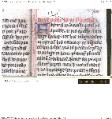
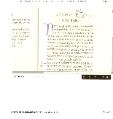
individually, but as a collection. The earliest and complete Pauline corpus is the Chester Beatty
manuscript, p46, dated about 200 AD. It includes all of Paul’s epistles except the three pastorals,
1 and 2 Timothy, and Titus. The interesting note about this collection is that Hebrews is contained
between Romans and 1 Corinthians. This is true for other similar collections of Paul’s letters, in
which Hebrews is numbered among the other epistles that Paul authored.
Many important church fathers also wrote that Paul was the author. The church fathers were men,
neither apostolic, nor inspired, who would comment in their writings upon biblical doctrine or
particular heresies in the church. Clement of Rome, for instance, a contemporary of Paul (Phil. 4:
3), wrote to the Corinthian church made famous in Paul’s two epistles. In his letter, dated about 96
AD, Clement quotes heavily from Paul’s letters, especially 1 Corinthians, the original letter to the
church, and Hebrews. Though he does not name Paul specifically as the author, he references
the book, in conjunction with the other epistles of Paul, as if he were the author without question.
Eusebius of Caesarea, an early church historian, wrote out a list of the canonical books of the NT
at the request of the Christian-friendly emperor Constantine. In his list, he gave proofs of
inspiration and canonicity for the NT, along with naming the authors of the various books. He
claims, with authority, that Paul wrote 14 epistles including the book of Hebrews.
Athanasius was another father who defended Paul’s authorship of Hebrews. He was a
contemporary of Eusebius and the theologian who defended the orthodox doctrine of Christ’s deity
against 4th century Arianism. Like Eusebius, Athanasius was among other early church leaders to
affirm the 27 books of the NT and name the individual authors. He too listed Paul as the author of
Hebrews and placed the book between 2 Thessalonians and 1Timothy in his collection.
One final individual important to this discussion is the Alexandrian father Origen. Opponents of
Pauline authorship often quote his remarks casting doubt upon Paul’s authorship of Hebews.
Origen writes, “Who wrote the epistle [Hebrews], in truth, only God knows.” It is never pointed out,
however, that the context of this quote argues for Pauline authorship. Within the same paragraph,
Origen writes, “Therefore, if any church holds that this epistle is by Paul, let them be commended
for this. For not without reason have the ancients handed it down as Paul’s.” Lastly, Origen
quotes Hebrews in his writings over two hundred times as Paul’s epistle.
This is not a complete list of early church fathers that held to Pauline authorship, but it is evident
many believed the apostle wrote the letter.
|
|